All of Jesus for all the world…including near-but-forgotten worlds hiding in plain sight.
Greetings from the Columbia Gorge where the mighty east-west Columbia River splits the north-south Cascade Mountains. See those four volcanoes? We live in the middle of ‘em.
This blog began as part of Kristine’s and my journey, following the Lord that has led us to Carson, Washington, right at the exact center of the Columbia Gorge.
In one way we know this place…the geography. We’re native Pacific Northwest GenXers who spent plenty of time in the nature part.
In another way we know and love it, too: People who live in the Columbia Gorge are NOT-Seattlites and NOT-Portlanders. It’s own sub-culture, geographic and historic. The people here choose to be here. It’s separatist-yet-encroached-upon flyover country on both sides of the river.
And it’s torn, spiritually and economically. Evil is real here.
“But God!”, right? Carson Bible Church is a faithful little outpost praying to the Lord of the Harvest to send workers.
Here we are, Lord. Now what?
On gift and mission
Many years ago I had one client that grew to be a sizable account. The love and alignment were mutual, and they put me on stage quite literally around the world as an independent industry analyst and trainer of virtual presentation skills. In their eyes, I was the evangelist with “wrote books” cred…and more than once they tried to hire me.
My answer to them? “Are you going to create a unique position, approved by the CEO, that matches what you want me to do for you? Or do I get hired into an existing role and spend my weeks in meetings and things that keep me from doing the things you love about what I do for you?”
You know the answer.
It’s part of why I’m passionate about how God originally designed us, and how we grow in two ways that are both relational: how’s my relationship with God? And how did He wire and gift me, including the gifts of experience like tragedy and success, to agape others?
It began with much pre-Jesus search for self, but it was my version of being a hippie in light of a church I knew didn’t represent Truth as best I could tell. Mind you, I was the 80s version of a hippie, but much like the Jesus Movement, it was rooted in a search for truth. Fortunately the long and winding and unnecessary road is something God redeems in the most profound ways, right?
Blessed be the God and Father of our Lord Jesus Christ, the Father of mercies and the God of all comfort. He comforts us in all our affliction, so that we may be able to comfort those who are in any kind of affliction, through the comfort we ourselves receive from God. ~2 Corinthians 1:3-4, CSB
Theologies are useful, as are frameworks, and I’ve deeply studied those and enjoy them geekily. But you know what’s more fun? Watching Jesus light up their world (and I don’t say that in pastorish way, I mean it selfishly!):
It’s the pleasure of seeing the Holy Spirit work in and through somebody AND that somebody growing in their own amazement at belovedness and giftedness. Because God first loved them…not only redemptively, but enough to have been designed for His good, right, and true purposes from the very start. Like Jesus for the sake of others.
I always like the way big-brain guys like Abraham Kuyper and John Calvin referred to “self knowledge before God.” We learn deeply about ourselves in relationship, first with God.
It’s why we grab the Bible over and over and over. Maybe even have it in hand and heart as we go to work. We don’t fear vain philosophies or systems that bear lies or half-truths. We’ve delegated duty and authority for the King, power in His Spirit, on His mission…right where you are.
He made you to flourish in relationship. The Holy Spirit is who Jesus (and the Father) gave you. Because He loves you that much. Now go and do likewise.
Carson’s a statistical anomaly. Ready for some good weirdness?
Carson, WA isn’t even big enough to be a town. No stoplights, one gas station. This “census designated area” is in between three volcanoes, up the road from the Columbia River on the way to the forest, the last stop before you get to some of Washington’s most remote frontier. In a relative sense, little moves in or out.
But there are many unique places in the U.S, right?
Let’s just say Carson’s 2300 people are in a small group of the many thousands of small communities in the U.S. When combined, there’s a statistical anomaly in the age/median income/culture story here.

This puts Carson in a category with a small percentage of communities in the U.S. Crazier still, it’s an “old” community that didn’t get there by way of being a retirement community.
But what’s unusual isn’t just the number…it’s also the trajectory. A few decades ago Carson looked like the U.S. and PNW. But it has aged FIVE times faster since. This is highly unusual, statistically speaking.
A pastoral challenge? Internally, we risk having expectations that a new pastor will return CBC to its “heyday” when they had to have two services, kids were everywhere, and money was flowing.
But now we know statistically something everyone here knows experientially… 25 years later they’ve closed the local middle school. The valley has aged unusually relative to everywhere else.
The bottom line
In sum, this isn't just an older town…it’s becoming one of the oldest ordinary communities in America (that is not intentionally a retirement community). Not because thousands of retirees moved here, but because young people left, fewer young families arrived, and those who stayed faithfully built this community together. It’s not a criticism…it’s simply today’s inherited reality.
And it’s a clue about where ministry needs are greatest. This especially includes youth precisely because of the predominance of older generations. It’s a real opportunity for CBC to be regionally influential because people in the Gorge drive for what they need, and CBC’s got thriving TrailLife and children’s ministries.
Wait! There’s more.
Everyone knows that affordability’s an issue everywhere, and here in the Columbia Gorge we’re right on the border between C- (Washington) and D- (Oregon) for housing affordability. But Carson gets even weirder than that, unlike other Gorge towns just a few miles away.
If age in Carson makes it look like it got stuck in time, the economics affirm the story.
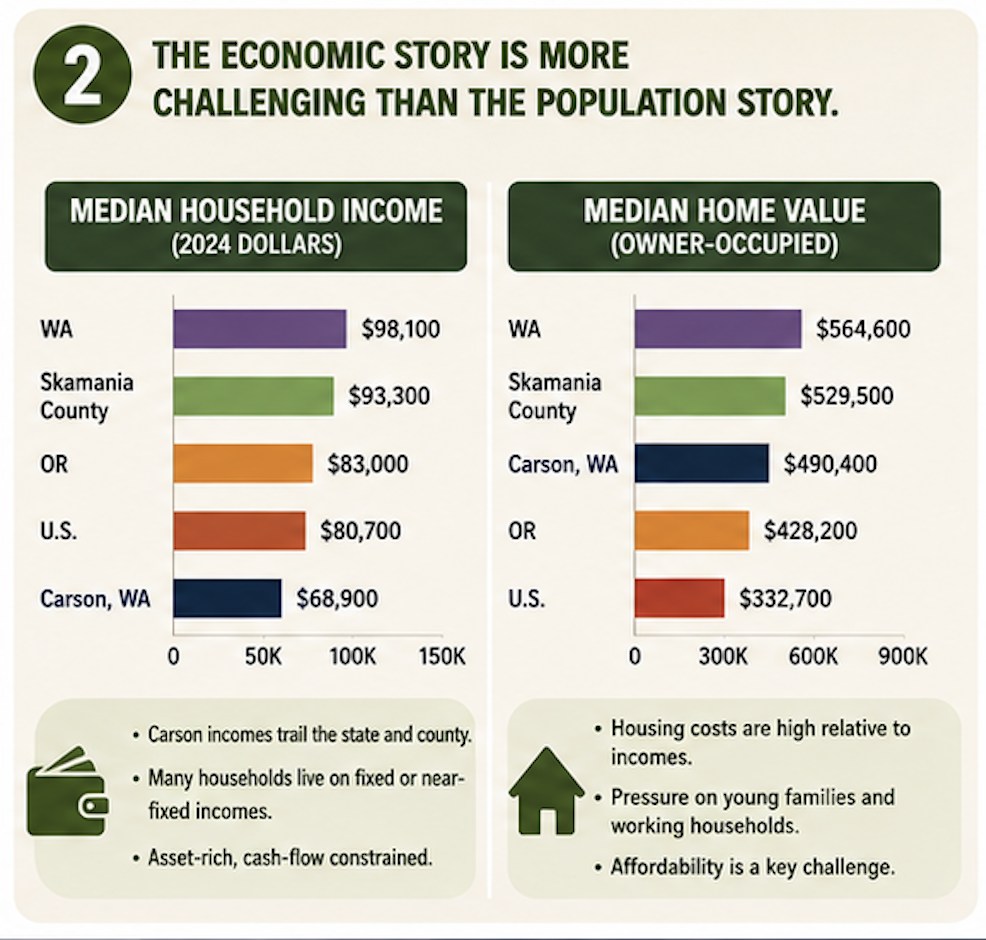
Housing prices in Carson are comparable to Portland (one hour away), but median income in Carson has risen less than $6000 since 1990 and is now ~30% lower than the state average.
Functionally, Carson stopped growing. The whole valley — and CBC also — began existing like fixed-income retirees. Let me explain.
Here’s the rub
What happens when someone retires on a fixed income? Over time — especially if it’s a long retirement — the world starts closing in. Rising cost of living means decreasing discretionary income. Further, decreasing physical capacity means projects that may have once been DIY (e.g., repairing a roof, painting some walls, keeping up the yard, replacing the carpet that was new in 1993…) go untouched.
And that’s Carson Bible Church. It’s historic, it’s known for faithful and hardworking pastors and elders, and it’s a place everyone within driving distance knows about. A few decades ago it looked like the rest of the PNW… they built a bigger sanctuary, hosted multiple services, and no doubt had an sense of community that happens when things are moving and shaking.
Three decades later? It’s a bit like having that hard conversation with your parents when a) their fixed income doesn’t go as far as it used to b) they just can’t take care of the house and ranch the way they once did.
It’s not failure, it’s just time. It’s a trend that isn’t a mystery about where it goes.
The bottom line, for real this time
Gorge-ites live here on purpose, and this is doubly true for Carson (which is smack in the middle). It’s not Portland or Seattle. All that’s good.
But the good-weirdest part of the story isn’t aging valleys and churches. And it’s not, per se, people living at the end of the grid or even a sparsely-populated county being disrupted by encroaching change.
It’s how God clearly keeps showing up. …showing up in the faithful people who keep showing up. It’s weird good. (Stay tuned for the many stories of how even in our short time here)
Like a zillion other community churches, they just can’t afford a full time pastor. And while the whole region they’ve long touched still knows CBC, they don’t have the people-energy they once did. Naturally, their world has shrunk in a natural and naturally cyclical sort of way.
That’s the opportunity before us…a faithful history and legacy in a natural season. And one that also happens to be smack in the middle of a totally anomalous populace — a world with deep spiritual needs due to aging, poverty, and utter economic stagnation.
Or as I think of it, good weird.
***
Hey, Lord of the Harvest, we kinda need some help over here. Help us be faithful stewards as we trust You to protect and provide for Your flock. Amen.
Spiritual warfare conference + shrimp on the barbie? Put 8/29 on the calendar.
Why: Because spiritual maturity includes, at a minimum, spiritual preparedness
What: Faithful authors + online conference + chance to gather, talk on a topic (and eat, of course). We’ll eat and watch this together: https://deeperwalk.com/product/battle-ready-spiritual-warfare-conference-2026/
Where: Our living room (or yours.
When: Sat, 8/29, 10a-2p
Food: Might be more like “grouse on the grill” than “shrimp on the barbie.”
Ping me for directions if you don’t know the location.
Their description:
Spiritual warfare is real, but it doesn’t have to be confusing, dramatic, or intimidating. Join three trusted leaders for a practical, biblically grounded conference that brings clarity to a topic many believers either fear or misunderstand.
Here we are, Lord. Now what?
Just because you’re comfortable in a city doesn’t mean you belong there, right?
I grew up in the logging boom of southern Oregon — a time when prosperity flowed much like the later dotcom boom which I later rode to a career in tech. It’s a weird spot to sit in history.
Carson, WA shared in that logging boom. There’s still an operating sawmill here about a mile up the road.
Smack in the middle, right on the main drag past the one stop sign in town, is a little church whose story trails back in time until the mists cover it. Carson got a post office in 1894, and the earliest ChatGPT-assisted thing I can find is that the church might be from the 1920s.
But look past the few buildings. The Wind River Valley flows to the Columbia River and the longest national scenic area in the U.S. Carson itself isn’t even an incorporated town, which is precisely why it’s so interconnected from Bonneville to Mill-A, Saint Helens to La Grande, Stabler to Cascade Locks.
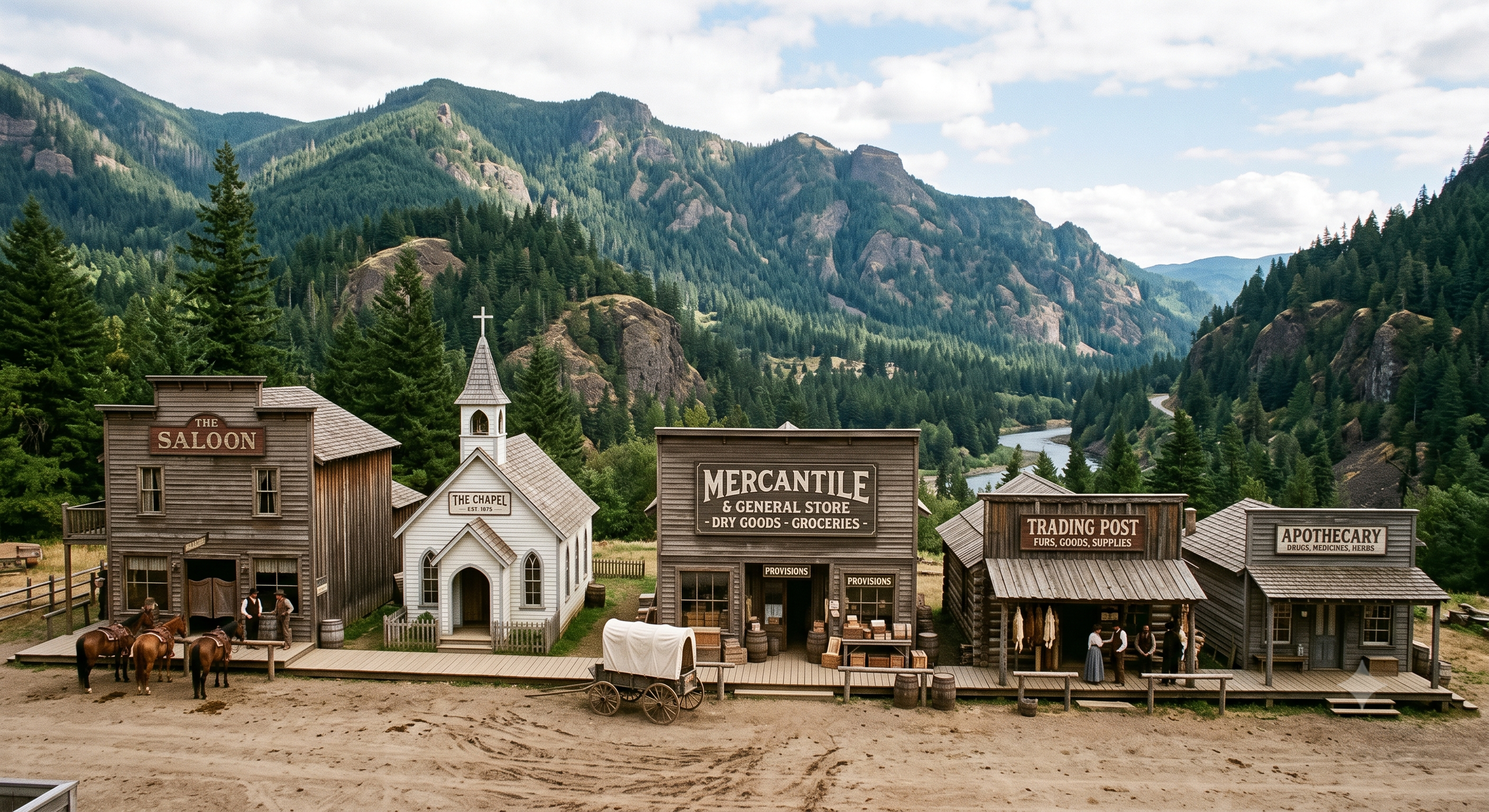
An only-slightly exaggerated view of Carson, Washington. The biggest building might be the saloon, but we’re praying for restoration if not revival.
Up the road a few miles, just across the county line, is a sign that proclaims the area as the “Supernatural Capital of the Pacific Northwest.” We’ve got apologists for bigfoot and the pacific northwest ape cat. We’ve got Satanists. And if my market research is right, there are a whole lot of “sorta” folks who don’t go to church or “used to go to Carson Bible Church (at one time Carson Community Church) but <fill in the blank with something like ‘church hurt’>.”
Ironically, I recently learned of a large church group in the Portland Metro area looking to plant a church here. Why would they do that? Because they believe there’s a need to reach the area and that current churches ain’t gettin’ the job done.
Read that last line again.
Like many churches in America, Carson Bible Church has looked like it needs help. CBC is the kind of church that “missionary pastor”-sending orgs like Village Missions and InFaith serve — a very full time need, tons of opportunity, a faithful-but-aging population who, for a host of reasons, can’t afford a full time pastor.
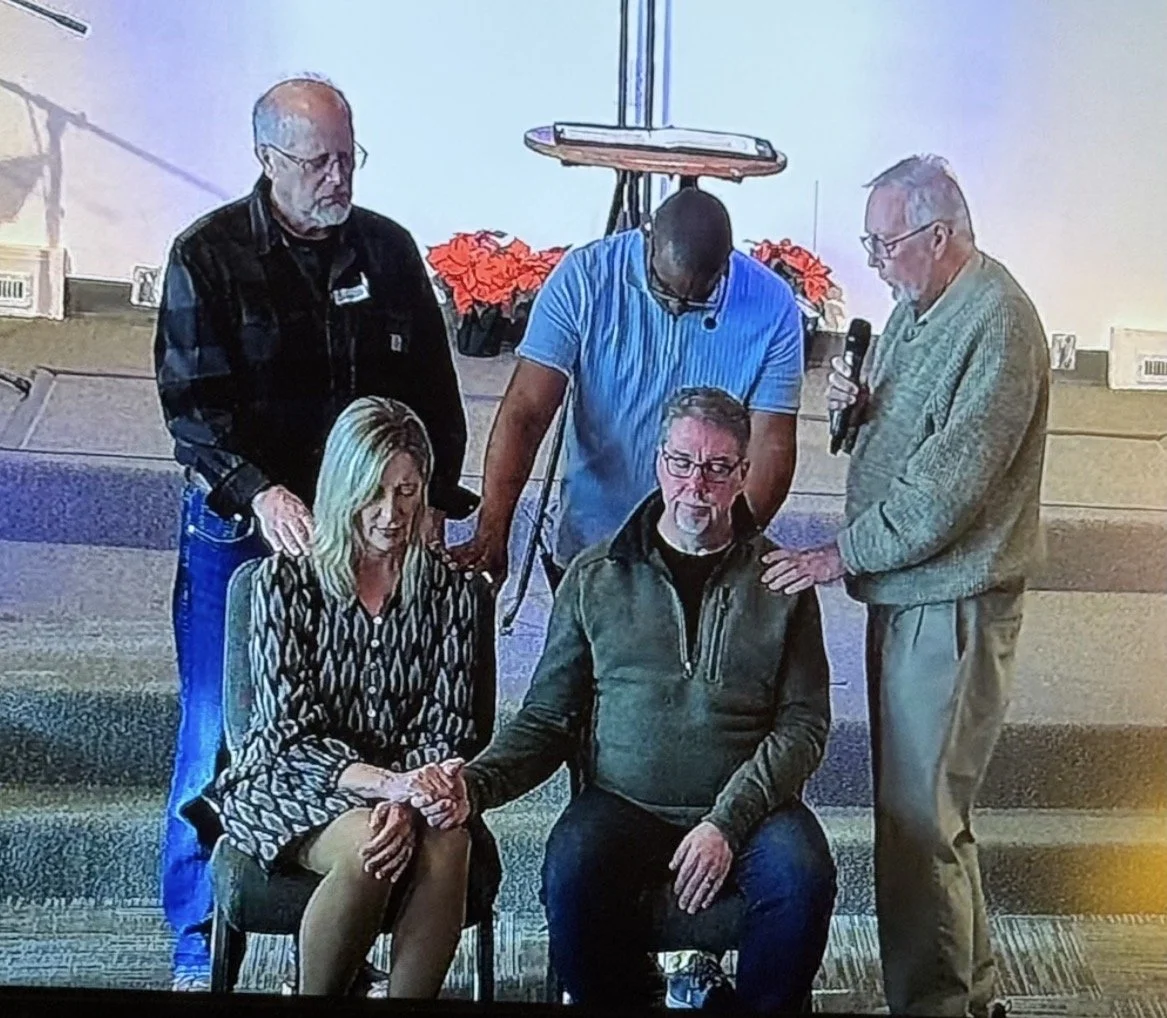
Called…and Sent
“What is God’s will for my life?” is a common question (ours too!). One part of answering that is found in community…is there affirmation?
For us, our previous church, multiple small groups we were part of, and various individuals have “sent” us…prayerfully, missionally, and financially…even before being accepted to ‘go’ officially with BeOneTogether.
So now what, Lord?
If the gifts of the Spirit and many long spousal conversations are any indication, one of the “R” words suits: revitalize, restore, renew, rebuild, rejuvenate. Spiritually and physically.
For a little church suffering a long wait on the Lord, God made it possible for us to get here…significant personal decrement to our savings account, supporters who believe with us that this is where He wants us, even a crazy story about there being no houses to rent (zero, zip, nada) and God providing one for just a smidge what our housing allowance is.
And the “now what?” we stepped into includes a killer set of faithful men as elders, a thriving TrailLife ministry and several Millennial/Gen Z families with kids, and 5 acres of woods that we still don’t know what to do with (at one time the vision was a school). This same “now what?” includes many obvious touchpoints across the family of counties — incoming commuters to church and for TrailLife, outgoing commuters who reach beyond our ‘burb, up and down the Gorge on both sides of the river, and increasingly a glaring need for something I may be uniquely equipped to help with… “hybrid church.”
The plandemic obviously kicked a lot of laggard churches into gear in terms of getting services available on YouTube. But a scant 6 months in this has evolved into weekly interaction with people in the region beyond an easy drive on Zoom… pastoral counseling and Bible studies being the first needs served this way.
All in all, Carson Bible Church IS a community church…in composition, in theological diversity, and in a way that reflects the bifurcated economy here. There’s a lot of poverty and the average income in this county is nearly a third less than the state. And yet the cost of living is above the national average.
In One Story:
A few days ago Kristine and I were out for a run and I saw a parked sheriff, approached, and introduced myself. I asked the kind gentlemen (Deputy Jason, if I remember correctly) about what he sees, and he corroborated our suspicions… drugs, domestic violence, and the occasional animal corpse that’s been violated. In other words, signs of those dealing with the dark cloud of hopelessness.
Hopelessness that the American Dream is even possible. Hopelessness that the encroachment of evil from Portland and Seattle is more than can be fought. Hopelessness even more that there is any escape from the rot within.
Uniquely, it’s a forgotten little corner of the mountains…the last gas stop en route to national forests and the most remote area in the state of Washington. And it’s just like every other place where the Lord has led a missionary willing to say, “Here I am, send me.”
As for this pastor and his wife, however comfortable traveling the world and it’s cities, we could not be more glad to be here.
What kind of pastoral care are you providing now? Updated.
UPDATE: July 1, 2026
Well, now I’m the bivo pastor of a rural church in the mountains, and there’s definitely more work to do than there is time. Good thing the battle is the Lord’s!
Weekly pastoral counseling (via Zoom) with a local trauma-surviving ministry leader
Multiple hospice and hospital visits…and a couple home-sending services for a couple now-rejoicing saints
Shared the gospel with a couple teenagers visiting from California
Helping someone moving… not my primary gifting, but will show up and sweat for donuts
Managing the tech for a 12-week cohort of pastors, counselors, and coaches deepening their skills in relational spirituality
Creating a “Family Read Along” document summarizing key ideas from a ‘mentor’ — Dr. Darrell Bock — based on three of his books (commentary on Luke, theology of Luke-Acts, and exposition of progressive dispensationalism).
Counseling a remote attendee with discerning the ‘call’ in life
Became a published songwriter!
Leading a ‘gather/analyze/synthesize’ strategic planning series of meetings for the whole congregation
Co-planning the fall launch of TrailLife (think Christian, not-woke Boy Scouts)
UPDATE: October 2025
Because pastoral care is such a critical part of shepherding, here’s a little update to add to the one below.
I’ll not be able to recount every conversation here, but a quick continuation of the bullet-point summary below include new examples such as
Mentoring a new ex-Satanist, helping him/her transform old ways of thinking into one shaped by the Bible and a biblical worldview
Fielding multiple phone calls from a podcast listener, helping her walk through parenting a child with concerns of self-harm and sexual identity confusion
Working with a young man interested in ministry to address his challenge with pornography
Walking beside a small-town gal with a really big job offer/opportunity in a populous part of California
Hospital visitation for a family facing a near-death physical trauma
Walking along side a friend going through an ugly divorce (was eerily similar to my own… 2 Cor 1:3-4)
A conversation with a professional colleague whom I learned is deconstructing out of Mormonism…and an accepted invitation to a follow up conversation just about spiritual things
These kinds of experiences might be assumed for a pastor, but my bi-vocational resume doesn’t have years and years of “pastor” in a way that communicates them. That said, counseling, mentoring, and personal/relational growth are all part of helping someone grow in Christ. I relish these, because it’s where, in a sense, operating in the power of the Spirit gets real.
April, 2024
A ministry of God’s word, I believe, “will not return void” (Is 55:10-11) because it’s His mission, not mine. Sometimes it’s focused on prayer and teaching (a la Acts 6), but more generally it’s incarnational ministry.
I say this, because I just moved to a new town and church (where my now-wife was attending before we married), and my primary ministry is via my daily Bible reading podcast, and it is from this that most of my care opportunities have bubbled recently. Put another way, listeners grow to trust me pastorally, and some of them reach out.
Just so far in the first few months of 2024 this has included:
Newly married man asking about how to lead his wife well spiritually when she knows the Bible better than him
Multiple members of one family (over multiple different calls) who just lost a baby to being stillborn
A widow now dating asking for resources on how to discern a man who will be committed to a Jesus-centered wedding.
Answering common questions (for multiple people) such as “What version of the Bible should I use?” or “What’s your take on gender dysphoria?”
Answering uncommon questions such as one gal asking about a cult her mother is involved with
Sharing the gospel with a mentee who identifies as queer
Prayer for a listener headed into a hospital procedure
A request to be at a hospital for another listener local to me.
At my new church I’ve already been asked to co-lead a small group and fill in for the men’s ministry leader facilitating a men’s meeting. Each of these led to a “pastoral moment” outside of the formal with someone who approached me for something.
The point is this: I’m already providing pastoral care to people regularly, and my current “ministry of the Word” is more than preaching/teaching… and while the podcast is the lead instrument of the ministry, I do more than just talk into a microphone. ;-)
What kind of pastoral care are you providing now?
UPDATE: October 2025
Because pastoral care is such a critical part of shepherding, here’s a little update to add to the one below.
I’ll not be able to recount every conversation here, but a quick continuation of the bullet-point summary below include new examples such as
Mentoring a new ex-Satanist, helping him/her transform old ways of thinking into one shaped by the Bible and a biblical worldview
Fielding multiple phone calls from a podcast listener, helping her walk through parenting a child with concerns of self-harm and sexual identity confusion
Working with a young man interested in ministry to address his challenge with pornography
Walking beside a small-town gal with a really big job offer/opportunity in a populous part of California
Hospital visitation for a family facing a near-death physical trauma
Walking along side a friend going through an ugly divorce (was eerily similar to my own… 2 Cor 1:3-4)
A conversation with a professional colleague whom I learned is deconstructing out of Mormonism…and an accepted invitation to a follow up conversation just about spiritual things
These kinds of experiences might be assumed for a pastor, but my bi-vocational resume doesn’t have years and years of “pastor” in a way that communicates them. That said, counseling, mentoring, and personal/relational growth are all part of helping someone grow in Christ. I relish these, because it’s where, in a sense, operating in the power of the Spirit gets real.
April, 2024
A ministry of God’s word, I believe, “will not return void” (Is 55:10-11) because it’s His mission, not mine. Sometimes it’s focused on prayer and teaching (a la Acts 6), but more generally it’s incarnational ministry.
I say this, because I just moved to a new town and church (where my now-wife was attending before we married), and my primary ministry is via my daily Bible reading podcast, and it is from this that most of my care opportunities have bubbled recently. Put another way, listeners grow to trust me pastorally, and some of them reach out.
Just so far in the first few months of 2024 this has included:
Newly married man asking about how to lead his wife well spiritually when she knows the Bible better than him
Multiple members of one family (over multiple different calls) who just lost a baby to being stillborn
A widow now dating asking for resources on how to discern a man who will be committed to a Jesus-centered wedding.
Answering common questions (for multiple people) such as “What version of the Bible should I use?” or “What’s your take on gender dysphoria?”
Answering uncommon questions such as one gal asking about a cult her mother is involved with
Sharing the gospel with a mentee who identifies as queer
Prayer for a listener headed into a hospital procedure
A request to be at a hospital for another listener local to me.
At my new church I’ve already been asked to co-lead a small group and fill in for the men’s ministry leader facilitating a men’s meeting. Each of these led to a “pastoral moment” outside of the formal with someone who approached me for something.
The point is this: I’m already providing pastoral care to people regularly, and my current “ministry of the Word” is more than preaching/teaching… and while the podcast is the lead instrument of the ministry, I do more than just talk into a microphone. ;-)
Residency Update
This is a running commentary on my ~year of being Ministry Resident at Journey Church Tacoma.
The Final Quarter
The summer saw my DMin work shift into high gear, developing an adult ed program for me to lead based on my thesis project (Conversatio Divina: “Tell Me Your Story” as a Relational Spiritual Discipline). I just recently kicked it off with about 30 gracious people. This will help dial in the final form: all virtual for Follower of One, a marketplace mission community where I served on the leadership team and board for years.
Importantly, this quarter’s program will, by God’s grace, spur growth in the Holy Spirit in the congregation — and the data I’ll report back to the church on aggregate results in aggregate will bless all involved.
Finally, as of today I’ve haltingly emerged from my six-month sabbatical on my podcast, #ForTheHope Daily Audio Bible. Want to hear me serve somebody at Journey Church Tacoma dealing with actual Satanic warfare?
The First Nine Months
Besides a bit of preaching, I’ve been blessed by weekly, generously-lengthed 1:1 sessions with Pastor Myron Crockett. I also participate weekly in Staff meetings, monthly at Leadership Board meetings, and occasionally join the worship team.
Perhaps most educational (because it’s been the most intense) is a digital ministry that developed caring for and discipling a house church in Oregon that’s been a like a “Journey Church Tacoma South.” What a blessing to walk along side Spirit-filled on fire and leading others to eternal life in Christ. It’s been entirely a “do life together” ministry with a thousand teachable moments.
Finally, I’ve been blessed to have been given a chance to preach (I’m missing a couple, so check back):
Living Faithfully in a Shaky World (2 Peter 1:3-8), Aug 17, 2025
Job Description of the Church (Acts 1:8), June 22, 2025
Wise Up to Shore Up (James 1:13-18), Feb 16, 2025
Kicking Off
As of this writing (Christmas, 2024), I’m now a part-time “Minister in Residence.” I put that in quotation marks because the residency — a bit like a doctor doing a residency — is a time of learning and sharpening with the intentional guidance of the elder team.
The (slow) process of integration and “roll out” has begun, and we have made Journey Church Tacoma our covenantal home until the Lord calls us to a permanent assignment. My introduction to the congregation has begun with a couple preaching assignments. Most recently this was an advent message in a series about Old Testament promises (God With Us, 12/15/24).
Too, this has begun a formation-in-process mentoring relationship with the head pastor and elders that
has been coordinated with the Pacific Northwest district of Christian & Missionary Alliance to be in line with ordination (please also see this),
kicked off a season of reading/discussing books geared toward eldership/leadership,
initiated a multi-part training program including preaching, teaching, evangelism, etc.
As I said in my introduction, while I bring a lot of life experience to the table, I’m humble and eager to learn with my boots on the ground. And with my knees on the floor.
Soli Deo Gloria.
Connectorship?
I made up the word "connectorship" in August 2014. At the time I’d never heard a word expressed just like that. But to be fair, I don’t think I was actually the first person to do so.
I was on the plane on my way home from getting certified as a John Maxwell Team leadership coach, and I was contemplating what I’m good at that is also a transferrable skill. I was asking myself, ‘could I teach it?’ Could I help people become disciples who also then grew into disciple makers?
I so fell in love with the idea of "the art and skill of connecting people and ideas" that I even registered the domain name.
Years later, now a "connections" pastor is a common role in churches and similar roles in other non-profit settings.
What does not appear to be common is what they mean by that!
To me, there are a few essential ways to think about “connectorship:”
First, connectorship is both relational and propositional — about both people and ideas. In other words, sometimes it’s about people connecting with people, and sometimes it’s about people really ‘getting it’ with regard to an idea — learning, if you will, a concept, plan, estimate, purpose, or sense of something.
Interestingly (to me, anyway!) it perfectly fits the context of my doctoral work — relational spirituality — because God is the source and model for both. Only in Jesus do we find both personhood and truth perfectly unified.
Second, on the relational front, the ‘connections’ are first to God (Ro 12:1-2), other believers (Ro 12:3-8), and even strangers (if not also enemies and even secular institutions) (Ro 12:9-21, 13).
Importantly, connectorship is also connecting to yourself — your own story in light of God’s story. I’m not a Calvinist, but giving credit where credit is due, in the opening to Institutes John Calving pointed out just that — that the most foundational point of self-knowledge is a knowledge before our Creator that ‘compels us to look upward.’
The mission, then, is His mission (missio Dei). And the gifts of the Spirit are for His purposes. We first understand who we are in relation to God such that we realize we need a Savior, but then we must connect (together) to our own gifting in terms of reaching our own potential in God’s story.
Third, on the relational front, to me this means that small groups and other means of connecting the body to each other (He 10:24 et al) are as important as Sunday morning sermons. Yup…I just said it out loud. To state it in philosophical language, Sunday morning gatherings and sermons are a necessary, but insufficient, means for fueling the Christian life.
Fourth, connecting to “ideas” similarly is a necessary — but insufficient — means for fueling the Christian life. Of course we are to grow in knowledge, including of ourselves and our gifts, etc. And trust me, as a guy who is deep in psychometric instruments like Strengthsfinder, Meyers-Briggs, and even a certified coach in Core Values Index, I’ll argue all day long that the biblical conception of self-knowledge can only fully happen in community. But we learn things, about God, about the Bible, about ourselves, about theology, about a bunch of things so as to better relate relationally. We don’t want to just know about God or ourselves — we’re wired for relationship. Knowing God, not just knowing about God. Knowing others, not just knowing about them. Knowing ourselves, not just sharpening our own self-labeling.
Finally, there are host of different ways of conceptualizing the spiritual journey from non-believer to believer, and from believer to increasingly sanctified believer (I’m partial to the Gray Matrix), but the important thing is to remember that, however conceived, the point is to meet someone where they’re at and co-journey with them to the next step, whatever that is).
What do we “connect?” We help people connect to Jesus, which necessarily is a way, a truth, and a the path of life. It is first God’s story…and we are simply part of that. And there is no better antidote to a postmodern, post-Christian world where “my truth” and “your truth” are bantered about than to offer the Great Shepherd who’s words are both invitation and command: “follow me.”
P.S. If you reeeally want to get geeky about connectorship, let’s talk about the academic discipline of social capital. Short of that, suffice it to say that I really believe that relationship is the oldest new killer app.
“In the moment” or “as you are going” spiritual care — a crazy story!
A critical element of providing spiritual care is relationship. “Being there” when the baloney hits the fan for someone often (usually?) begins with relationship that’s already been established by doing life together, talking about football or breaking bread or serving alongside each other at the local Union Gospel Mission.
But sometimes it’s just what happens, right? Consider…
Kristine and I were en route from eastern Tennessee back to Nashville as part of a trip where we were praying over where God would have us serve. And after a stop for some food, I wanted a Diet Pepsi for the road, so we pulled into a gas station that had a mini-mart.
I got to the counter with my prey and said to the gal behind the counter, “How’s your day?”
Tracie — the store manager by the designation on her name tag — didn’t look good. And she said so.
In a way that was jovial (almost jokingly, if I’m honest) I said, “Is it time for us to have a prayer meetin’?”
She didn’t skip a beat, and she didn’t take it as a joke: “Yes. My friend JUST got raped and just tried to commit suicide.”
By this time a sharply-dressed black man came in the store and was standing behind me. I motioned him over. He stepped up to the counter. I didn’t —as I usually do — ask for permission to put my hand on her shoulder. I don’t even know why…I just did it.
And I started praying, out loud, there in the gas station, for her friend.
Minutes later Kristine and I were on the freeway and I just sat there in stunned silence. I barely remember what I prayed. In hindsight I could have probably offered to call the police or something. I’m sure I could have prayed a better prayer.
But God doesn’t need our perfect prayers…He delights in our willingness to step into battle. And I was feeling “winded” because I had just gone into spiritual battle at the drop of a hat… …with a gal and some other stranger in a gas station mini mart.
I don’t share this in self-aggrandizement. I share because I look back and realize how unlike me — and how very much like the Spirit — that was.
It’s one thing to think formally about spiritual formation and providing spiritual care to students or coworkers or parishioners.
But it’s maybe another thing to equip them to be ready at any given moment to, “as you are going,” step into the fight.
Truth and the true church of Christ will always be under assault. We may or may not have time to premeditate our response.
If we don’t answer young people’s questions and invite them to a different mission, who will?
Sitting in Sean McDowell's class many years ago, Sean told a story of his own journey in the shadow of a famously well-known apologist father. And the way his dad addressed Sean’s doubt’s was simply to encourage him to pursue truth — confident that Sean would find that only Christianity would satisfy his deepest desires, including for truth.
That’s how I think about working with youth and young adults. We know that the number one reason young people 18-34 leave the church is because their questions don’t get answered adequately.
This comes in several forms. Two — not addressing difficult cultural issues or inadequately addressing them — are often are expressed in a form of anti-intellectualism that tells you to ‘just have faith.’
And this makes me sad.
Upholding the primacy and veracity of Jesus, Christianity, and Bible need not include checking one’s brain at the door. Indeed, it’s difficult to follow Jesus with all heart, soul, and mind if we do.
I’ll not deep dive approaches to apologetics here. Suffice it to say, though, that being prepared to offer an answer with gentleness and respect (1 Pe 3:15-16) as we contend for the faith (Jude 3) and refute false teaching (Ti 1:9; 1 Ti 2:24-26) isn’t all about debates and explicit debunking.
What I have found is that walking with people through life means that a) you’re with them when the difficult moments come and b) if you’ve earned trust, you’ll have an opportunity to speak into their life.
And like Josh McDowell’s response to his son Sean, we need not fear doubts and questionings and searchings in our families or students or small groups or whomever we serve.
Indeed, we may just have an opportunity to serve in relational, communal Christianity in a way that God designed. Psychologists recognize that parents (ideally) help their children grow from dependence to independence to interdependence. Some part of their individuation includes forming attachments beyond their nuclear parents.
And isn’t one point of community to provide a place for them to form new attachments who will, as an alternative to TikTok or other purveyors of cultural narratives, to provide young people a place to form attachments and explore ideas in a way that will keep pointing them back to the Gospel?
That’s been my experience as a leader. Young people are deeper than they’re given credit for, and if we don’t answer their big questions and point them in the direction of identity, meaning, and purpose, who will?
What’s your position on inerrancy?
To be fair, I could write 500 posts here answering “what’s your position on…,” but here’s why inerrancy is near and dear to my heart: because we need to be able to defend the validity of the Bible as a set of historical documents as part of the broader argument. It’s where we learn about Jesus, and if we get Jesus wrong, we’ve got a problem (called making up your own Jesus and gospel, Galatians 1:6).
When doing my MA in Apologetics, we spent a year on just the topic of the Bible, textual criticism, inspiration/inerrancy/infallibility/authority/perspicuity, etc. I’m blessed that Talbot School of Theology (Biola University) takes this seriously.
To shorten this post, just know that I align, without reservation, the entirety of the Chicago Statement on Inerrancy in all it’s affirmations and denials. I appreciate in particular that the broader text includes argumentation for the contextual setting and hermeneutical approach.
What is “5000 coffees?”
You’ll often hear me talk about “5000 coffees,” which my own short hand for “spiritual engagement.” But it’s not original to me.
A couple years ago I was sitting in one of my doctoral classes, and the time had turned to open dialogue with the two profs. One of the profs was also a successful pastor, and a student asked him the secret to his success. His answer, “5000 coffees.”
The reason it struck me was because it was what I was already doing.
We sometimes use words like “discipleship,” “mentoring,” and “spiritual formation” in ways that represent a pretty broad semantic range. I’m probably guilty of that, too.
But the reason “5000 coffees” struck me (and even became the basis of my doctoral thesis project) is because whether the occasion was a business lunch, a guy I was mentoring in an addiction recovery program, or even buying a t-shirt at a concert merchandise table, I see all conversations as spiritual and relational.
And in a context of service — pastorally or otherwise — getting to know the people you serve, being genuinely curious (if not patient!), it how we cut through the noise in a seriously noisy world.
The old adage is almost a cliche’ — people don’t care how much you know until they know how much you care, right?
Maybe I’m weird. But I can sit down with anybody and genuinely say, “Tell me your story.”
And one key to my “first 100 days” plan at your organization is 5000 coffees (give or take a few).
Are you open to other roles that aren’t technically “pastor” roles?
Most certainly.
Here’s why, and why I think it might make sense to you.
I’m pastoral in my every day life. I don’t need a job title…I AM a pastor.
Further, I’m wired as a teacher, disciple-maker, and relationship builder. Training and development has not only been my long-time secular career, but helping people grow in their walk with Jesus is what I do every day because I can’t not do so.
I build relationship, and I live a ministry of the Word — teaching, discipling, mentoring, leading, guiding, facilitating, curriculum and event planning, coordinating classes and groups and meetings and outings, and on and on.
In short, living to help people “move one notch closer to Jesus” could just as easily be at a university or non-profit ministry as a formal church.
If you’ve got a position where I can use the gifts God has given me, let’s talk.
Tell us about your personal relationship with Jesus Christ
I’ll be honest, this question makes me immediately think of a book like John Stott’s Why I Am a Christian.
Short: I have one, a real one, a Spirit-filled, daily, and deep one.
Longer: Like many people this relationship has evolved and matured over the years. But to me the important distinction is “Do you live life with a few Jesus sprinkles on top?” or “Do you actively pursue, nurture, and intentionally grow in relationship?”
If you appreciate Scott McKnight’s Jesus Creed (I do!), you’ll appreciate that knowing the Great Commandment and living are not always synonymous. It’s more than my morning devotions where I a) LOVE GOD by reading and praying on my own and then b) LOVE OTHERS read and pray for my daily podcast audience). Further, we’re not loving Jesus if we don’t keep his commandments to love others (Jn 14:15), and that happens in a host of intetional, interpersonal ways.
Longest: I’m not going to write a book here about “Why I Am a Christian,” but if I did it would necessarily include a nearly inexhaustible list of little things. By analogy, it’s like my relationship with my wife — you get to know someone in a way that changes you, enables you to finish each other's sentences, know what the other person values and how they’d make a decision, and on and on. I try to be a good bride THAT way for my Lord, Savior, and Husband, Jesus.
Describe your volunteer activities during the last 5 years
When it comes to church involvement, volunteer activities, services organizations, community involvement, etc., there is a deep and varied answer.
Before I describe those, however, let me ask you a question – are you asking about formal or informal involvement?
Here’s why.
God’s rather clear he wants your heart, not your religiosity, right (Isaiah 1:11-17, Amos 5:21-24, Mark 12:33, et al)?
I’ll list all the formal activities below, but I’d hope you think it important to understand how I started engaging a homeless guy who sleeps in his car on the route where I run in the morning or how I share the gospel when the opportunity presents itself. Further, there are a host of other ways I act in a pastoral capacity, exclusive of a “formal context.” That’s the informal in terms of volunteer activities.
On the SEMI-formal side of the equation, in my small group leadership I have, for instance, worked with them to plan a night to go make burritos and go feed homeless people.
Finally, in a formal sense I’ve served for a few years as preacher/teacher/facilitator with Union Gospel Mission’s LifeChange program in their mandatory chapel services, played on worship team for many years, co-led a church-based experimental a men’s group designed to pair guys new in their faith with mature believers, taught worldview classes, and on and on.
What if?
I have a large library (reeeally large), but if I was on a desert island and could have but five books, Norm Geisler’s systematic theology would be four of them.
I was recently watching the documentary about his life and a few things struck me.
One, the title: Not Qualified. It’s like that could be my story. Not because I’m an intellect like him (trust me, I’m not!), but because I’m so desperately aware that if something good is going to happen, it has to be the Holy Spirit.
Two, he was a late bloomer. I’d heard it before, but I was reminded that Geisler was nearly done with high school when they figured out he couldn’t read. And this dude went on to get a PhD (but not ‘til he was nearly 40), wrote more than 100 books, founded a seminary, and on and on. Of course, history is full of late bloomers (e.g., Ray Kroc, Laura Ingalls Wilder), and I’m both inspired by that and it’s part of my own family story.
Finally, his own words “What if…?” were repeated ad nauseam in the part of the documentary that spoke about one of his own kids committing suicide. The truth is, I’ve never known a pastor who didn’t struggle with that in some way — knowing that their own shortcomings have affected others, particularly their family. Sadly, there are numerous stories of Christian influencers who looked back to regret that their family paid a price (e.g., Billy Graham, AW Tozer, et al). The documentary was a reminder that we can’t change the past, but we can change how we serve now.
That’s me. I’m no intellect like Geisler, and what I started were businesses rather than seminaries. What I traveled the world teaching (at least to date) was presentation skills, not theology and apologetics. My past includes divorce and mess. I can’t change any of that. But, as I trust my references will confirm, I’m an example of what God can do in someone’s life.
I’m a late-to-Christ late bloomer, a “what if” asker, and maybe I’m just smart enough to realize that I fall SO short in so many ways that if there is any fruit from my life, God gets all the credit.
I was one time named “the world leading expert in…” And now I hope it’s CT Studd’s words that are true of me…
Only one life, ’twill soon be past,
Only what’s done for Christ will last.
You can “what if” yourself to death. What if I’d gone to seminary in my 20s instead of my 50s? What if I’d been a Christian and equally-yoked? What if…? What if…?
All you have right now is today. And the chance to sing…
Only one life, ’twill soon be past,
Only what’s done for Christ will last.
Lead, associate, executive, or…?
This’ll probably sound weird, but the right fit will probably be more psychographically determined than demographically.
Here’s my two-sided question back to you: How do you define it? And what’s the nature of the team relative to what you want me to do?
For example, “associate pastor” can mean anything from “part of the core preaching/teaching team who takes rotations in the pulpit” to “guy who just does hospital visitations and administrative stuff the lead pastor doesn’t want to do.”
To me, then, the question is one of the team.
Am I entirely alone with an few other elders? Ok. I ran my own business, self-employed as a professional speaker for years. At most I had 1.5 employees. I don’t have the gift of administration, but you do what you gotta do (including outsourcing stuff like bookkeeping and accounting to real pros).
Thus, the idea of being a solo pastor in a small church somewhere might work. But what’s the elder team like, and do I get a little grace in the areas I’m not strong in?
Am I an “associate?” I’ll be honest, this is an exciting possibility to me. In one sense, I’m not a rookie and have led/built organizations and managed teams. But I also realize that while some part of that experience is transferrable, leading a church isn’t the same as leading a business. I have a LOT to learn. And I’d LOVE to do it on a team. I’ve used the band analogy before: am I the keyboard player who also happens to be able to pick up a mandolin… not the lead singer but a key contributor to both vision/strategy and tactical execution? Bring it. Sounds great.
Might I, because of my business/entrepreneurial background, be an executive pastor? Much like I articulated elsewhere, there’s a difference between what we’re all called to do (a general call as part of following Jesus) and having “the gift” (a particular calling and gifting). Let me be clear: I do not have the gift of administration (defined, in my estimation, as those who thrive in operations). But do I have a history and experience that means I could well manage your next building lease and working with/through an accountant to be fiscally sound both in present management and future investment? Yes. Am I an HR director that will perfectly nail being chief of staff? No. Do I know how to get that done otherwise? Yes. Running your own business doesn’t mean you’ve got the gift of administration, but you definitely learn how to get things done nonetheless.
Again, the question is how do you define the role… really, as in fer realz?. And then who are the other team members.
What this really boils down to is a level of nuance that is almost NEVER seen at initial levels of dialogue. Let’s be honest:
Your job description, no matter how much you labored over it, only partially represents the position — and it almost never represents the team culture and nuances that help determine ‘fit.’
My resume and even this website, barely scratches the surface of (good stuff) what I bring to the table or (bad stuff) where I really suck and need some help.
I know my gifts and strengths and weaknesses deeply. And I trust that you’ll just learn to trust that I’ll accurately represent those in our dialogue together.
Over the years (decades!), I’ve figured out that — for me, anyway — the ‘devil is in the details,’ and the only way to get to ‘marriage’ is to start dating. Evaluating a dating profile might be the beginning, but neither of us will EVER figure out the character of the other person from a profile. Ya gotta start dating.
So here’s my two-sided question back to you: How do you define the role? And what’s the nature of the team relative to what you want me to do?
(Oh, and this could even be a non-pastor role…IF it’s a role that aligns with my gifts).
How would you delineate the task vs calling of evangelism?
A couple weeks ago I attended a secular concert of one of my favorite songwriters (Glen Phillips) in Seattle. It was a dinner theatre kind of venue, so Kristine and I showed up early and made a casual date of it.
Before the show started, I took a moment to hit the men’s room and swing by the “merch” table to buy a t-shirt. It turned out that I was the only one there. Before I was done finishing the transaction, I’d struck up a conversation with the gal behind the table, found out that she’d had some experience with churchianity in the past, and in the process shared the gospel with her. This wasn’t just a ‘name-drop Jesus’ moment…but it did include a complete presentation of the gospel. Kristine then had to listen to me gush about God’s goodness when I got back to our table. We right then and there prayed for her.
Did I issue an altar call? No. There was no explicit request for a “decision.”
I don’t share the story to self-aggrandize. Rather, it got me to thinking: that an outworking of the Holy Spirit’s role in the missio Dei that is distinguished between general and special calling.
Don’t miss this nuance:
ALL Christians are called to share the good news, to be ready to give an answer for their hope (e.g., Acts 1:8, 8:4; Mt 28:18-20; 1 Pe 3:15; 2 Co 5:18-20).
SOME are called and gifted with the spiritual gift of evangelism (e.g., Eph 4:11-12; Acts 21:8; 1 Co 12:28-31).
Further, I’d preach/teach that preachers and teachers are held to a higher account (e.g., Js 3:1; Ez 34:2-10; He 3:17; Lk 12:48), this leads finally to what I think is the lynchpin of this little post: buried in 2 Ti 4:5, Paul exhorts to the young Timothy to “do the work of an evangelist.”
And unless I’m missing something, Paul doesn’t have the particular gifting in mind here. Rather, he is to evangelize regardless of whether or not he also has the particular gift.
How would I delineate the task versus the calling?
There are better men than me to write the commentary on all this. But by analogy, not all have the particular gift of hospitality or administration, either…but all Christians are tasked with such at some level generally. The same is true with evangelism…except that it appears pastors bear a special burden to live in such a way that the gospel is shared intentionally.
Do I have the gift of evangelism? Sadly, no. I’m just willing to do the work of an evangelist.
TN or NC in June 2024? What’s up with that?
June 17 update, original post below
Have you ever had one of those moments?
That’s what Kristine and I were experiencing on our flight home yesterday — looking at each other and going, “Is God speaking to you like I think He’s speaking to me?”
We traveled from Nashville to Dayton, Dayton to Knoxville/Gatlinburg, Gatlinburg to Asheville, NC, and from Asheville up through Johnson City and eventually back to Nashville.
What we did experience is a TOTALLY unexpected draw of our hearts to something undefined. We don’t know if it’s a particular ministry or location in that area, but in a way you’ll just have to trust me for, it was unexpectedly strong. We’ve been lifelong residents of the Pacific Northwest, and we’re flying home literally going, “Really, Lord?” Something moved in our hearts.
What we did not experience was knowing exactly what, where, or when. I’ve found two different positions at Christian colleges that would be awesome, but that’s ok given that, to me, "being pastoral” has a broad semantic range.
I’ve an opportunity right where I’m at to do an intentional ‘residency’ as an associate pastor while I finish my DMin. At a human level, I could make an argument for moving to Tennessee this summer and I could equally make an argument for hunkering down where I’m at for another year or two.
Fortunately this isn’t something I have to do solely in my own wisdom.
Thank you, Lord, that you’ll come through with the right answer when the time is right. It’s your church and mission. And I pray that Kristine and I will simply be ready to serve you today where you have us today, letting you take care of tomorrow.
***
Kristine and I have this in common: We’re very much natives of the Pacific Northwest AND we have traveled a ton.
She’s done more internationally (and I mean, a LOT), and I’ve done more domestically (have been in all 50 states).
But there’s been this niggling we’ve had about eastern Tennessee/western North Carolina (think Knoxville to Asheville), so we booked a trip to do a “prayer walk” road trip.
We’ll be there June 9th-16th.
If you know someone we should visit in between, we’re building our itinerary around God-shaped appointments.
Would THESE be an asset to you?
I’m passionate about helping people engage (and trust!) their Bibles…and it doesn’t take much poking to figure out I read the Bible into a microphone every day.
Further, I’ve written a few books in the secular world, and I’ve published one for Jesus (made up of some podcasting scripts/stories) entitled A Ministry of Showing Up: #ForTheHope’s Reflections for Jesus Followers with Day Jobs.
Importantly, the question on the table isn’t the specificity of the podcast or book…. it’s the approach to engaging one’s community. Read that again. The point here isn’t those particular media assets.
Here’s why I ask the question, though.
I’m a visionary. I see an easy connection between the local church and how alternative media forms — podcast, book, Facebook, etc — integrate with how a local community reached and served.
But you don’t exactly find many pastor job descriptions that ask if the candidate is media-ready, right?
Don’t miss this point:
The point of this little bit of dialogue isn’t to lay out a lengthy argument so much as to point out something we should talk about.
Ask me about how “5000 coffees” has been critical to me “doing the work of an evangelist.” (2 Tim 4:5)
Ask me about how I think (know, actually) a book affects perception of outsiders.
Ask me how we might engage and encourage discipleship in ways that actually integrate with existing (and important!) traditional modalities such as life groups, family ministries, recovery ministries, etc.
I just rarely — okay, never — see a job description that includes, “Hey, it’d be great if you could write little books that would help congregants have conversations with their neighbors at a BBQ” or the like.
I look forward to the chat. ;-)